

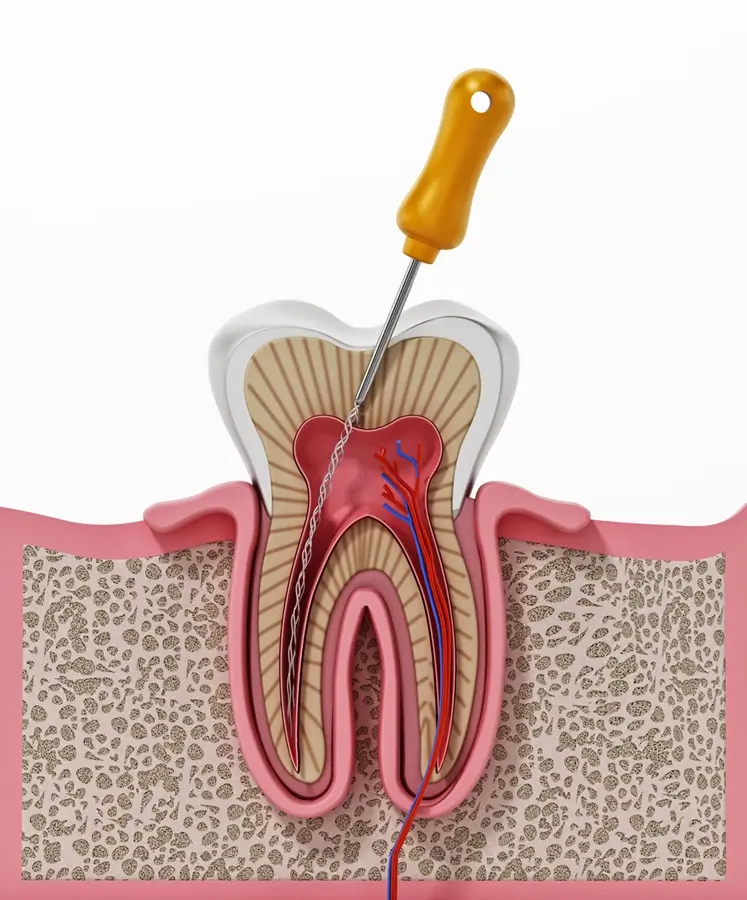
Root Canal Treatment :
Root canal treatment doesn’t cause pain—it relieves it. This procedure removes infection from inside the tooth, prevents further damage, and saves your natural tooth, helping preserve your smile and avoid unnecessary tooth loss.
Inside each tooth lies a pulp chamber filled with nerves and nutrients. If a cavity is left untreated, bacteria enter the pulp, causing infection, abscesses, and intense pain. If ignored, it may lead to swelling, bone loss, and serious oral health problems.
At Sri Sai Dental Hospital, we provide painless and precise root canal treatment using advanced tools and techniques. Our specialists remove the infected pulp, clean and disinfect the canal, and seal the tooth to restore full function and comfort.
Experiencing persistent toothache, sensitivity to hot or cold, gum swelling, tooth discoloration, or a recurring pimple on the gums? These are common signs you may need a root canal. Early diagnosis leads to better outcomes, so don’t ignore the symptoms. At Sri Sai Dental Hospital, our experienced endodontic specialists use advanced technology and follow strict sterilization protocols to ensure safe, precise, and effective treatment. Each patient receives a personalized care plan, resulting in high success rates and long-lasting results. Call 8074474304 or visit us in Chandanagar to restore your tooth with expert care and confidence.
Understanding Root Canal Treatment: When and Why You Need It
Inside every tooth lies a space called the pulp chamber, which contains the root canal system and the pulp—a living tissue made up of nerves, blood vessels, and connective tissue. The pulp is vital during tooth development, especially in childhood, as it helps form the hard structure of the tooth.
What Is Root Canal Treatment?
Root canal treatment (also known as endodontic therapy) is required when the pulp becomes inflamed or infected. This can happen due to decay, trauma, or repeated dental procedures. If left untreated, it can lead to severe tooth pain, infection, and eventual tooth loss.
Common Causes of Pulp Infection
The pulp may become damaged or infected due to:
Deep decay that reaches the inner pulp
Repeated dental treatments on the same tooth
Cracks, chips, or trauma to the tooth
Advanced gum disease affecting the root
Large or leaking fillings
When to See a Specialist
If you experience tooth pain, lingering sensitivity, swelling, or pressure, consult a dental specialist promptly. Early diagnosis and treatment can save the tooth and prevent further complications.
At Sri Sai Dental Hospital in Chandanagar, we offer advanced, pain-free root canal treatments using modern techniques to ensure safe and effective results.
Call 8074474304 to book a consultation or visit us for expert dental care.
Symptoms and Consequences of an Infected Pulp
When the pulp inside a tooth becomes inflamed or infected, it creates internal pressure, leading to sharp or throbbing pain. If not treated promptly, the pulp may die—temporarily reducing discomfort but allowing the infection to spread into surrounding bone and tissues.
In some cases, this develops into a chronic infection, resulting in persistent discomfort, swelling, or even damage to nearby teeth and bone structure. Ignoring these symptoms may lead to serious oral health complications, including tooth loss or abscess formation.
Why Timely Treatment Matters
Prompt intervention by a qualified dental specialist can:
Eliminate infection and pain
Preserve your natural tooth
Prevent damage to surrounding tissues
Avoid future complications and costlier treatments
For precision-based, pain-free root canal care, it’s important to visit an experienced endodontic specialist. Sri Sai Dental Hospital in Chandanagar offers advanced treatment using modern technology and personalized care.
First Time Getting a Root Canal? Here’s What to Expect
Feeling nervous about your first root canal? You’re not alone—but rest assured, the procedure is far more comfortable than many people expect. Understanding the process can ease anxiety and help you feel prepared:
Local anesthesia is administered to numb the area
The infected pulp is gently removed
The canal is cleaned, disinfected, and shaped
The space is filled and sealed
A crown may be placed for protection and function
The procedure is often completed in one or two visits and is designed to relieve pain—not cause it.
Step-by-Step Guide to the Procedure
If you need a root canal treatment in Chandanagar, understanding the procedure can help ease your concerns. A dental specialist in Chandanagar ensures a painless, effective process to save your tooth. Here’s what to expect:
Step 1: Local Anesthesia
Your dentist will numb the affected tooth and surrounding tissues with anesthesia to ensure a pain-free procedure.
Step 2: Accessing the Tooth
A small hole is drilled in the tooth’s surface to access the infected pulp chamber and root canals.
Step 3: Removing Infected Pulp
The diseased pulp is carefully removed using specialized instruments, eliminating pain and infection.
Step 4: Disinfection
The root canals are thoroughly cleaned and disinfected with antibacterial solutions to prevent further infection.
Step 5: Shaping the Canals
Tiny instruments shape the canals for filling, ensuring a secure and long-lasting restoration.
Step 6: Filling & Sealing
The canals are filled with gutta-percha, a rubber-like material, and sealed with adhesive cement to prevent reinfection.
Step 7: Sealing the Access Hole
A temporary or permanent filling is placed. In some cases, a post is added for extra support.
Step 8: Post-Treatment Care
Your dental specialist in Chandanagar may prescribe antibiotics and pain relievers. Mild discomfort for a few days is normal and manageable with medications.
Step 9: Permanent Restoration
A crown or filling is required to restore tooth strength and prevent reinfection. Your dentist will determine the best option for you.
Need a Root Canal? Contact a Dental Specialist in Chandanagar Today!
If you’re experiencing tooth pain or infection, visit a dental specialist in Chandanagar for expert root canal treatment. Book your appointment today to save your tooth and restore your smile!